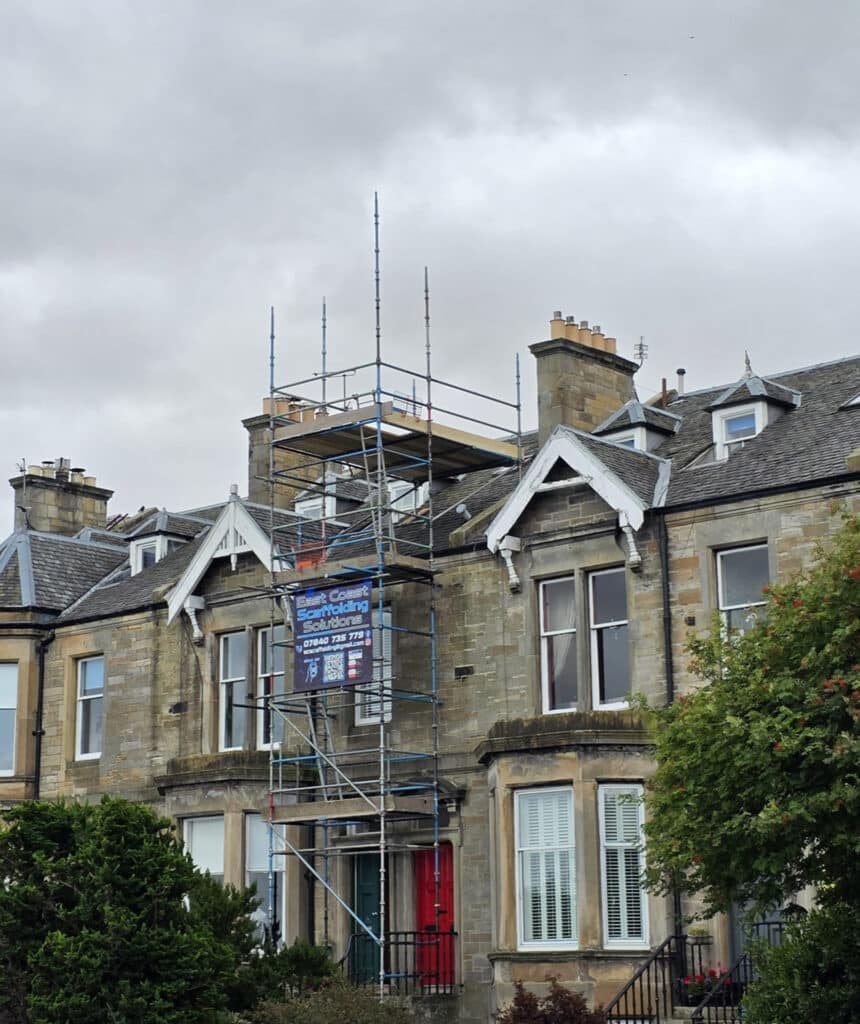
- Specialist access for petrol station maintenance and refurbishment
- Careful planning around vehicles, customers and operational forecourts
- Professional scaffolding services throughout Edinburgh and surrounding areas
Scaffolding For Petrol Stations & Forecourts
Access Solutions For Petrol Station Projects
Working at height on a petrol filling station introduces considerations that do not normally exist on a conventional building site. Fuel storage and dispensing, continuous vehicle movements, customer access and confined working areas all have to be taken into account before scaffolding is erected.
East Coast Scaffolding provides temporary access for maintenance, repair and refurbishment work on petrol stations and forecourt sites across Edinburgh. Each project is assessed around the physical layout of the site and the work being undertaken, allowing the scaffold arrangement to support contractors without unnecessarily interfering with day-to-day forecourt operations.
- Canopy access for repairs, painting and refurbishment
- Shop and kiosk scaffolding for external maintenance
- Roof access for inspections, repairs and replacement works
- Signage access for high-level branding and lighting
- Façade scaffolding for rendering, cladding and decoration
- Temporary access for planned redevelopment programmes
Early coordination is particularly valuable on forecourt projects. Knowing where vehicles travel, when fuel deliveries take place, which areas must remain operational and where contractors need to work allows the scaffolding requirement to be incorporated into the wider site plan before erection begins.
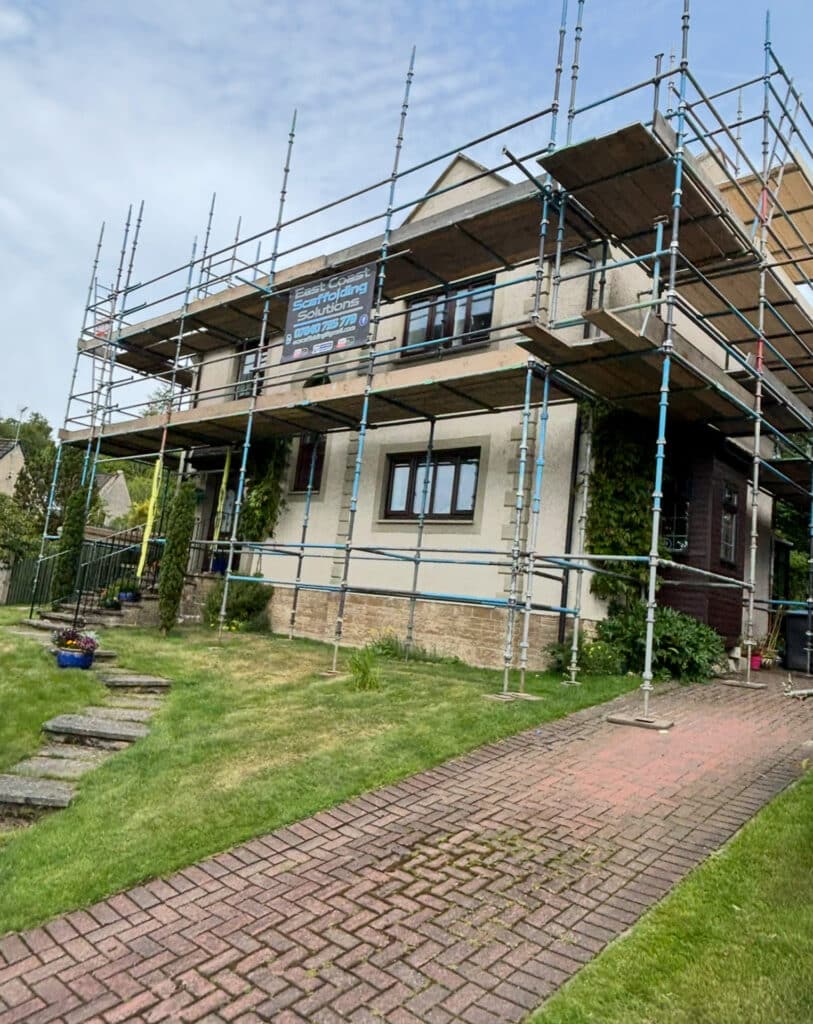
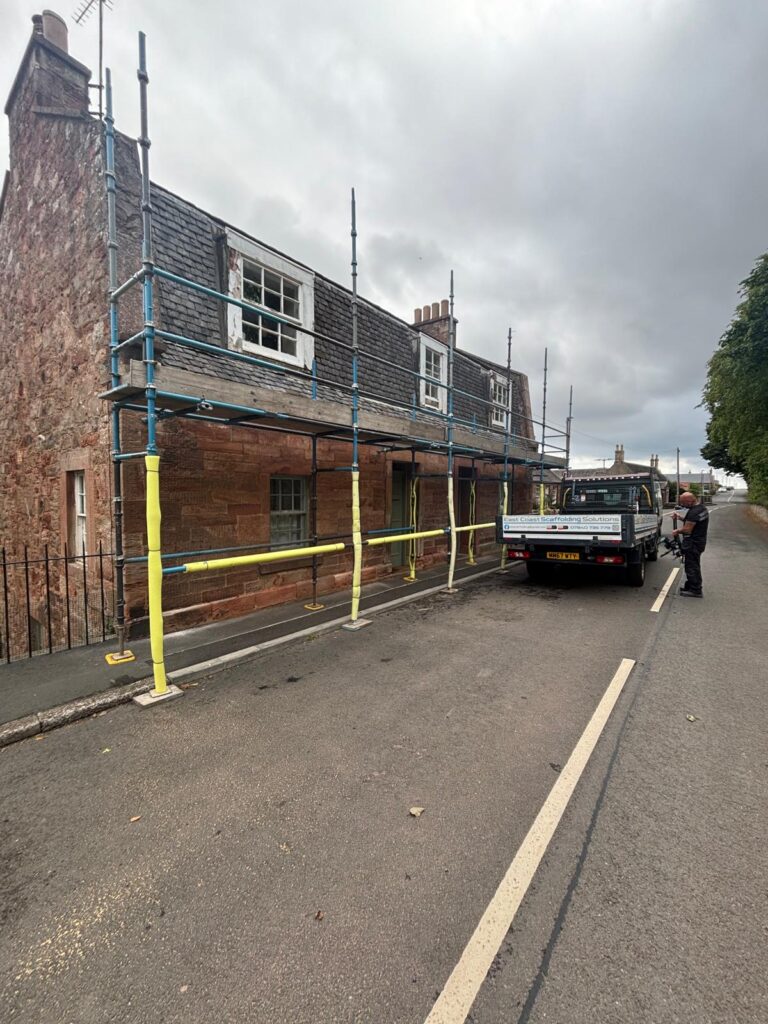
Canopy Scaffolding & High-Level Forecourt Access
Petrol station canopies are exposed structures that periodically require cleaning, repairs, repainting, signage alterations and replacement of external finishes. Their position directly above active vehicle areas makes access planning especially important.
Depending on the site and scope of work, scaffolding may be required for:
- Canopy fascia replacement and decoration
- Roof covering repairs and inspections
- Gutter, drainage and edge maintenance
- Lighting and electrical installation access
- Branding and signage replacement
Rather than treating the canopy as an isolated structure, we consider what is happening beneath and around it. Pump islands, vehicle routes, shop entrances and other working areas can affect where standards, platforms and access points can practically be positioned.
This helps create a scaffold arrangement that gives contractors the working space they require while fitting into the wider operational plan for the forecourt.
Scaffolding Where Fuel Is Stored & Dispensed
Petrol filling stations contain areas where flammable vapours can present a fire and explosion risk. Scaffold erection, alteration, use and dismantling therefore need to form part of the site’s wider safety planning rather than being approached in isolation.
Before work begins, the project team should establish where scaffolding can be positioned, how the relevant working area will be controlled and how scaffold operations will interact with normal forecourt activities.
Petrol gives off highly flammable vapour, which means some parts of a filling station are subject to specific controls. Scaffold work must be coordinated with the site’s risk assessment and any restrictions applying to the area in which erection or other work will take place.
Customers, delivery vehicles, contractors and fuel tankers can all use the same site. Scaffold positioning and erection activities therefore need to consider traffic routes and prevent the temporary works from creating unnecessary conflict with moving vehicles.
Tanker deliveries are an important operational activity on petrol filling stations and should not simply be treated as ordinary site traffic. The scaffold programme can be coordinated with site management so erection, dismantling and alterations do not interfere with planned delivery procedures.
Where part of the forecourt remains open, customers must be kept away from scaffold erection areas and other construction activities. Suitable segregation, controlled working zones and protection against falling materials may be required depending on the location of the structure.
Storm damage, impact damage or urgent building defects can occasionally require rapid access at height. Where immediate scaffolding support is needed, our emergency scaffolding service can help provide temporary access while the wider repair requirements are assessed.
A petrol station is a controlled working environment, so close communication between the scaffold contractor, site operator and principal contractor is essential. We can discuss the proposed work, understand the access requirements and provide a scaffolding quotation based on the individual forecourt rather than applying a standard arrangement to every site.
Forecourt Scaffolding For Refurbishment Contractors
A major petrol station refurbishment can involve numerous trades operating within a relatively small area. Roofing contractors, decorators, signage installers, electricians, cladding teams and shop fitters may all require temporary access during different phases.
We can provide scaffolding to support works such as:
- Convenience store and kiosk refurbishments
- External cladding and façade upgrades
- Canopy refurbishment programmes
- Roofing and waterproofing works
- High-level signage and branding changes
Platform positions and scaffold access can be planned around the jobs that actually need to be completed rather than forcing several trades to work from the same generic arrangement.
Where requirements change during the contract, scaffold alterations should be properly coordinated and undertaken by competent scaffolders. This allows working levels and access arrangements to evolve alongside the project without unauthorised changes being made to the structure.
For multi-phase refurbishments, this flexibility can be particularly useful where different parts of the petrol station are released for work at different times.
Planning Scaffolding Around An Operational Forecourt
Keeping part of a petrol station open while construction work takes place demands careful sequencing. The available space may change throughout the day, customer traffic can remain constant and access must be coordinated around the site’s own operating procedures.
Our involvement can begin with a survey of the structure and surrounding working area. Rather than looking only at height and dimensions, we identify practical factors that could affect erection and use of the scaffold. These may include restricted space beside pump islands, canopy projections, delivery routes, shop access, changes in ground level and areas that need to remain clear.
The scaffold can then be configured around the intended work. A roofing contractor may require continuous working platforms at eaves level, while a signage company may only need access to a specific canopy elevation. Refurbishment contractors can require several levels simultaneously, particularly where external finishes are being removed and replaced.
Protection of people outside the work zone is another important part of the arrangement. Where construction takes place close to customers or other contractors, suitable measures may be necessary to prevent materials or equipment entering areas below the scaffold.
Once the structure has been erected, it needs to remain controlled throughout its use. Scaffolds from which a person could fall two metres or more are subject to formal inspection requirements, including inspection after completion and at least every seven days, with additional inspections required in certain circumstances such as after modification or adverse weather.
Alterations must also remain controlled. If another contractor requires a platform moved, access changed or part of the scaffold removed, the change should be communicated to the scaffolding contractor instead of being carried out informally.
When the forecourt work is complete, dismantling can be scheduled with the site operator so the temporary structure is removed in an organised sequence.
For petrol station and forecourt scaffolding across Edinburgh, East Coast Scaffolding provides a practical service from initial survey through erection, alterations and final dismantling. Contact us with the details of your project and we can discuss the access required.