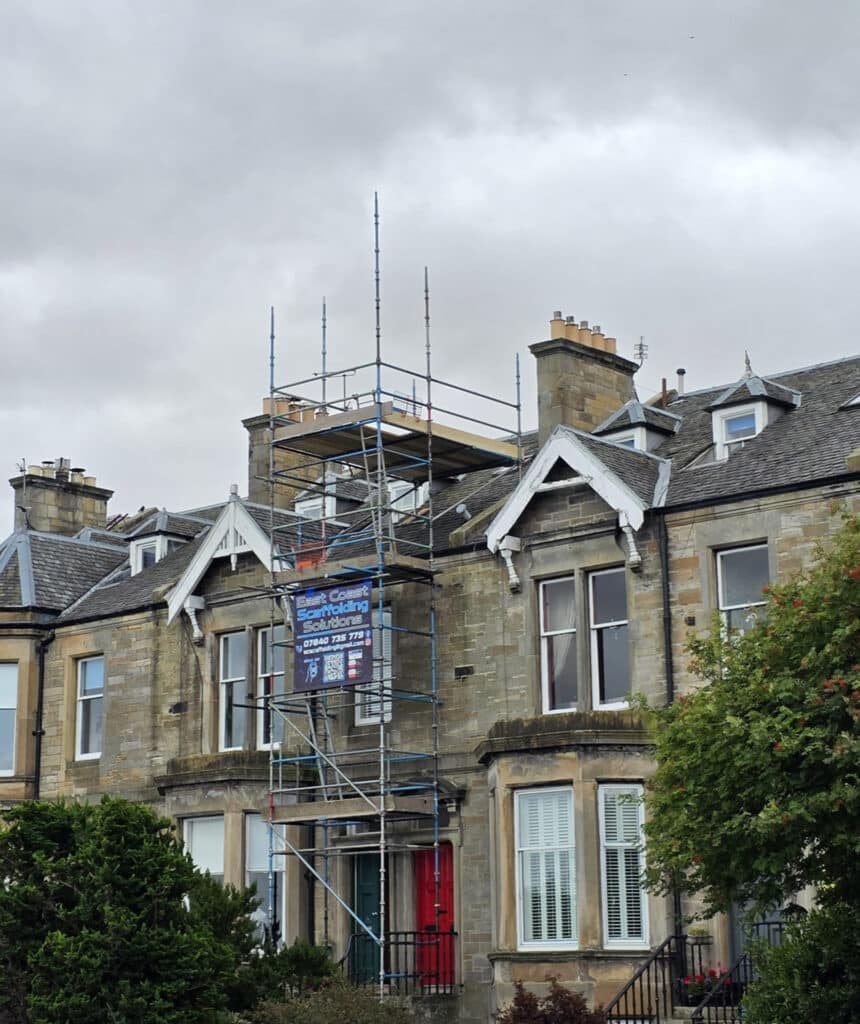
- Temporary access planned around occupied care environments
- Scaffolding for roofing, refurbishment, repairs and planned maintenance
- Considerate scheduling around residents, staff, visitors and essential access
Scaffolding For Care & Nursing Homes
Scaffolding Planned Around Residents & Daily Care
Care homes and nursing homes are very different from ordinary construction sites. The building may remain fully occupied while work is carried out, with residents, staff, visitors, deliveries and care services all needing reliable access throughout the project.
East Coast Scaffolding provides temporary access for care and nursing home buildings across Edinburgh and surrounding areas. We can support external repairs, roofing, refurbishment and maintenance while taking the day-to-day use of the property into account.
- Roof repairs and replacement around occupied care buildings
- External decoration and façade improvement works
- Window replacement and high-level glazing access
- Chimney, gutter and masonry repairs on older properties
- Extension and refurbishment projects for growing care facilities
- Urgent temporary access following unexpected building damage
Our planning starts with how the home operates. Main entrances, staff routes, resident areas, visitor access, delivery points and emergency exits can all affect where scaffolding should be positioned.
This helps create access for the contractors without treating the people living and working inside the building as an afterthought.
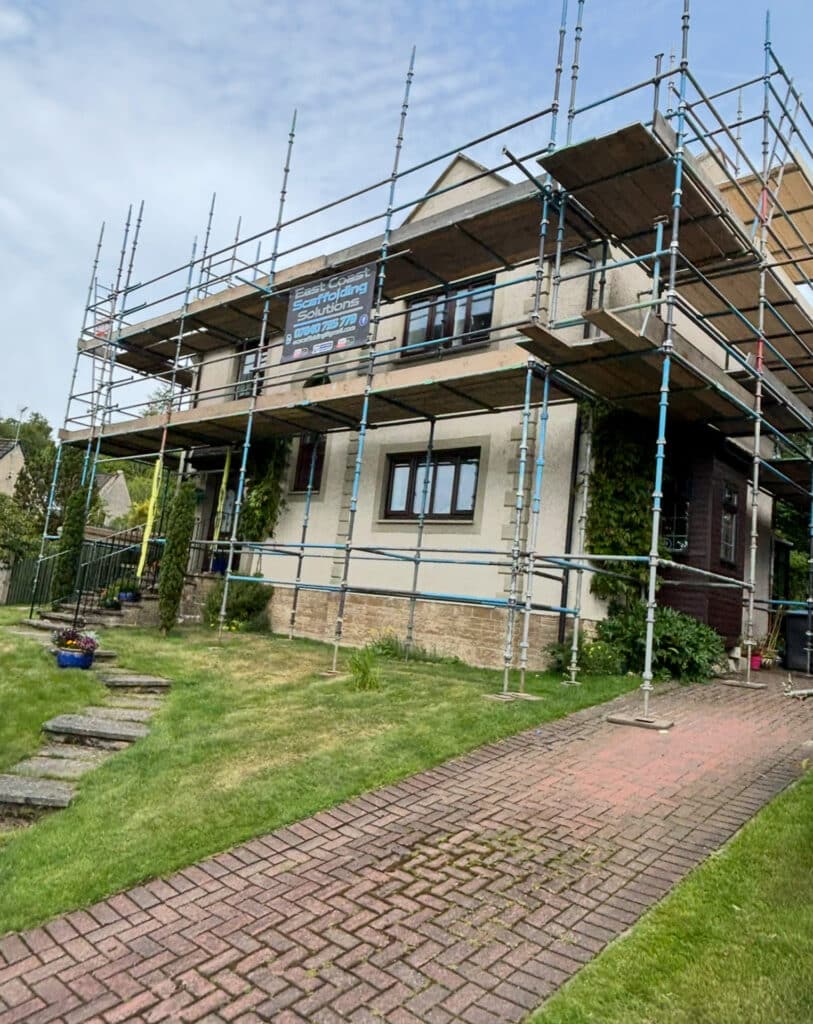
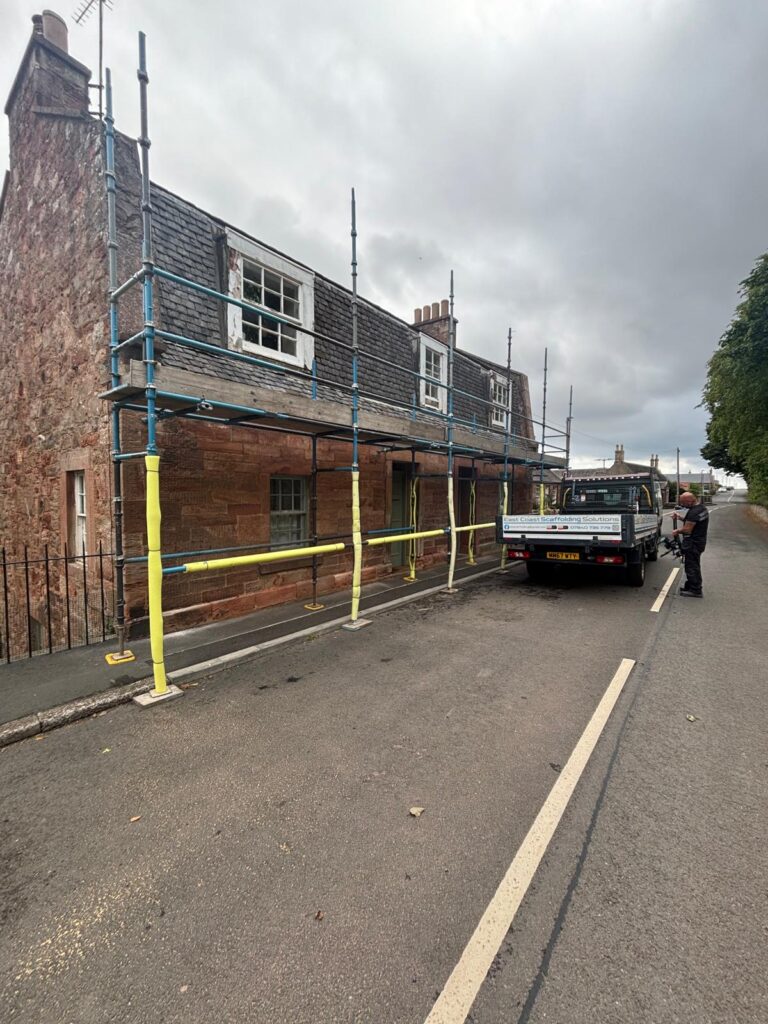
Roofing & External Repairs On Occupied Homes
Many care properties require maintenance while residents remain in place. Older roofs, masonry, render, windows and drainage systems can all need attention without making it practical to close the building.
Scaffolding can provide contractors with access for:
- Slating, tiling and flat roof repairs
- Chimney and parapet maintenance
- Gutter and downpipe replacement
- Stonework, brickwork and render repairs
- Window, fascia and soffit replacement
The scaffold can be arranged around the parts of the property receiving work rather than automatically covering every elevation. This can help reduce the footprint of the temporary structure around gardens, entrances and communal outdoor spaces.
Where a larger programme involves several elevations, work can also be phased. Contractors can complete one section before access moves to another part of the building, allowing finished areas to return to normal sooner.
A Considerate Approach To Occupied Care Settings
Temporary works around a care home need to fit alongside normal life inside the property.
Residents may have different mobility needs, visitors come and go throughout the day and staff require dependable routes between different areas of the building.
These practical requirements can be discussed before erection starts so the scaffold arrangement works with the site rather than against it.
Main entrances and accessible routes may need to remain clear throughout the works. Where scaffolding is required close to these areas, the layout can be planned around the access arrangements agreed with the home and project team.
Care facilities depend on clear staff movement and reliable emergency routes. Relevant doors, pathways and operational access points should therefore be identified before scaffold erection so essential circulation is not unnecessarily obstructed.
The timing of erection, dismantling and alterations can matter on occupied care sites. Where practical, scaffold operations can be coordinated with the home’s management team and wider construction programme to reduce avoidable disruption during sensitive periods.
Food deliveries, laundry, waste collections and other services can be essential to the running of a care home. Understanding where these vehicles stop and how supplies enter the building helps prevent temporary access from conflicting with important service areas.
Storm damage, loose masonry, roof failures and other unexpected defects can require urgent access at height. Our emergency scaffolding service can provide temporary access where repair teams need to assess or make safe a care home building.
Good communication is especially important on an occupied care property. We can work with the contractor, facilities team or care home management to understand the intended programme and any areas that need additional consideration before the scaffold is erected.
Scaffolding For Care Home Refurbishment & Expansion
Care facilities regularly evolve as buildings are modernised, extended or adapted. A refurbishment programme can include roofing, new windows, façade upgrades, extensions and alterations to existing parts of the property.
Temporary access may be required for:
- Construction of new extensions
- Roof alterations and new connections
- External wall upgrades and insulation works
- New windows, doors and architectural features
- Decoration and final external finishes
Where an extension connects to an occupied building, scaffolding can be planned around the interface between the existing home and new construction.
Working platforms may also need to change as the project progresses. The access required during brickwork or structural works may later need adapting for roofing, glazing or finishing trades.
Phased scaffolding can support this process by keeping access aligned with the contractor’s current work area rather than leaving unnecessary temporary structures around completed parts of the site.
Long-Term Maintenance For Care Home Buildings
A care property needs to remain safe, weatherproof and comfortable throughout its working life. That means building maintenance continues long after construction or refurbishment has finished.
Regular roof inspections can identify slipped tiles, damaged coverings and failing flashings before water enters occupied areas. Gutters and rainwater systems may need cleaning or replacement, while older masonry can require repointing or repairs.
External joinery and windows can also become part of planned maintenance programmes, particularly on larger or older homes where upper-floor access is difficult from ground level.
Scaffolding provides contractors with a stable working area for these jobs and can be installed only around the part of the property requiring attention.
For substantial homes with several wings, elevations or extensions, breaking maintenance into stages can make the programme easier to manage. One area can be scaffolded, repaired and dismantled before work moves elsewhere.
This can also reduce the amount of garden, parking or circulation space affected at any one time.
Temporary access may sometimes be required around courtyards or enclosed parts of the building where conventional external access is difficult. These areas need to be assessed individually because available ground space, windows, doors and existing structures can all influence the arrangement.
Another consideration is the number of contractors using the scaffold. Roofing teams, decorators, stone specialists and window installers can require different working levels. Planning those requirements before erection can reduce the need for unnecessary changes later.
Where an alteration is required, it should be coordinated with the scaffolding contractor rather than carried out informally by other trades.
The scaffold should also remain subject to the appropriate inspections throughout the time it is in use, particularly where it remains around an occupied property for a longer maintenance programme.
When the work is finished, dismantling can be sequenced with the care home’s management team and contractor to return paths, gardens, parking areas and entrances to normal use.
East Coast Scaffolding provides care and nursing home scaffolding for one-off repairs, planned maintenance and larger building improvement programmes. Contact us with details of the property and work required and we can discuss the most suitable temporary access arrangement.