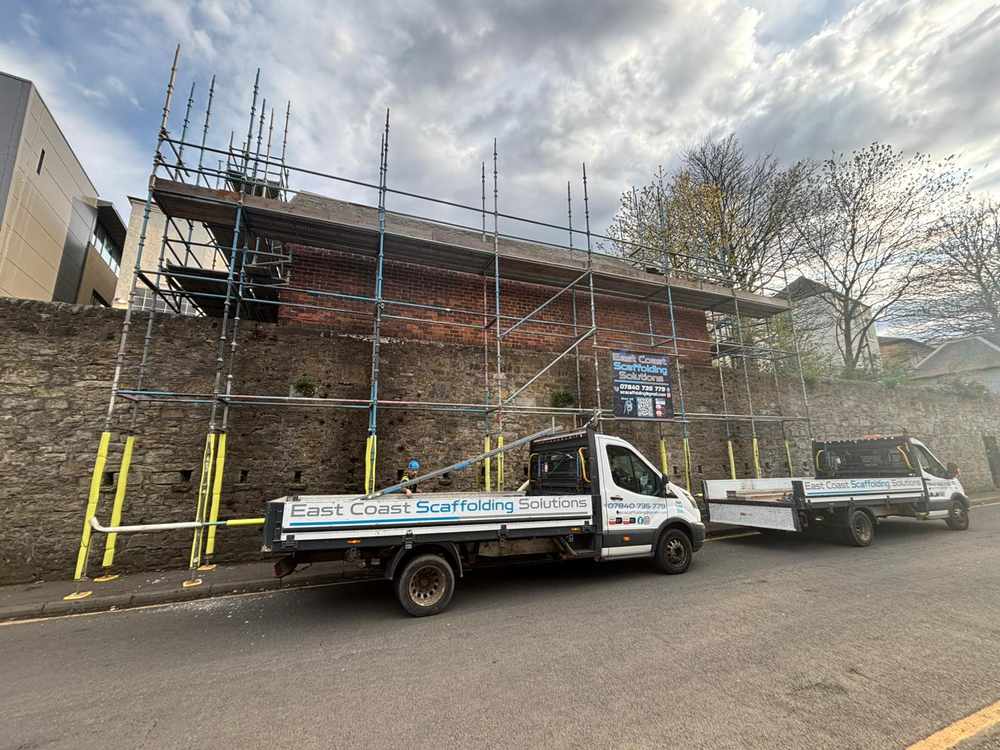
Construction projects rarely take place in isolation. Many are carried out alongside busy streets, shopfronts, office buildings, and residential areas where pedestrians pass by every day. When work needs to be done above ground level — whether for repairs, refurbishments, roofing, or façade improvements — the safety of the public is just as important as that of the workforce.
This is where pavement lift scaffolding plays a vital role. Designed to maintain safe pedestrian access beneath an elevated scaffold structure, it allows essential construction work to continue without forcing people into potentially hazardous routes such as active roadways.
Beyond simple convenience, pavement lifts are closely tied to regulatory compliance, risk reduction, and responsible site management. Contractors who understand their importance are better positioned to protect the public, avoid costly delays, and demonstrate professional standards.
What Is Pavement Lift Scaffolding?
Pavement lift scaffolding is a specialist scaffold structure that creates a protected walkway for pedestrians beneath a working platform. Instead of blocking a footpath entirely, the scaffold is erected with sufficient clearance so the public can pass safely beneath while construction takes place above.
At its core, the concept is straightforward: separate people from risk without stopping the project.
Unlike standard scaffolding that sits directly on private ground, pavement lifts typically extend into public space. This makes their design far more complex, as they must balance structural strength with safe access.
A typical pavement lift includes:
Elevated Working Platform
The first lift is positioned high enough to create clear headroom below, ensuring pedestrians can walk comfortably without obstruction.
Protective Decking
Close-boarded platforms or crash decks prevent tools, debris, or materials from falling onto those below.
Load-Bearing Framework
The scaffold must safely transfer weight to the ground while supporting both workers and materials above.
Defined Walkway
The route beneath the scaffold is kept clear, visible, and well-lit to promote safe movement.
The key difference between pavement lifts and traditional scaffolding lies in responsibility. When a scaffold interacts with public space, the margin for error becomes extremely small — and expectations rise accordingly.
Why It Is Used in Construction
Urban construction environments are becoming increasingly constrained. Buildings are often positioned directly against pavements, leaving little room for traditional scaffold layouts. Without a pavement lift, contractors may be forced to close footpaths entirely — something local authorities are often reluctant to permit unless absolutely necessary.
Pavement lift scaffolding solves this problem by enabling projects to move forward while preserving pedestrian infrastructure.
One of the primary drivers behind its use is public safety. Falling objects remain one of the most significant risks on active construction sites. Even a small tool dropped from a height can cause serious injury. By creating a physical barrier between the work zone and the public, pavement lifts dramatically reduce this risk.
Space management is another major factor. Diverting pedestrians into roads introduces traffic hazards and increases liability exposure. Maintaining a safe walkway helps prevent accidents while keeping the surrounding area functional.
Compliance also plays a major role. In the UK, scaffolding that occupies any part of the highway, including pavements, typically requires permission from the local authority. Pavement lifts are often specified as a condition of these licences because they demonstrate a proactive approach to safety.
There is also a reputational element at stake. Construction projects that disrupt public movement often prompt complaints from residents and businesses. By contrast, well-planned access routes signal professionalism and consideration.
Ultimately, pavement lifts are used because they allow construction to coexist with everyday life rather than interrupt it.
Key Benefits
The advantages of pavement lift scaffolding extend beyond basic protection. When designed correctly, it supports both operational efficiency and site credibility.
Enhanced Public Protection
The most obvious benefit is the shield it provides against falling debris. Overhead protection acts as a safeguard, helping ensure pedestrians remain separated from hazards associated with work at height.
This protection is particularly important in high-footfall areas such as town centres, transport routes, and retail districts.
Project Continuity
Closing pavements often requires additional approvals, traffic management plans, and extended timelines. By maintaining access beneath the scaffold, contractors can avoid unnecessary administrative delays and keep schedules intact.
Fewer interruptions typically translate into better productivity.
Legal Compliance
Meeting safety expectations is not optional. Properly designed pavement lifts help contractors satisfy licence conditions and align with recognised working-at-height guidance.
Failure to provide adequate protection can result in enforcement action, fines, or forced dismantling — all of which can derail a project.
Reduced Disruption
Businesses rely heavily on foot traffic. Blocking a pavement can affect customer access and damage relationships with neighbouring properties.
A safe walkway helps preserve normal activity and reduces friction between construction teams and the surrounding community.
Stronger Professional Image
Well-executed scaffolding reflects positively on everyone involved in a project. It demonstrates planning, competence, and a commitment to responsible construction practices.
Clients notice this — and so do regulators.
How It Is Designed and Installed
Pavement lift scaffolding is never a one-size-fits-all solution. Each installation must respond to the site’s specific conditions.
Site Survey and Planning
Every successful scaffold begins with a thorough assessment. Factors typically considered include pavement width, pedestrian volume, proximity to traffic, ground conditions, and building geometry.
Underground services may also need to be identified before load-bearing components are positioned.
Equally important is early engagement with the local authority to confirm licence requirements.
Structural Design
Because the scaffold spans an area used by the public, stability is paramount. Engineers must ensure the structure can handle vertical loads from workers and materials while resisting lateral forces such as wind.
Design frameworks commonly reference recognised industry guidance to ensure consistency and safety.
Tie patterns, bracing, and base arrangements are carefully calculated to prevent movement.
Load Distribution
Supporting a scaffold on a pavement introduces unique challenges. Surfaces may not have been designed to carry concentrated loads, so measures such as sole boards and spreader plates are often used to distribute weight evenly.
Ignoring this step can lead to settlement — or worse, structural failure.
Protective Features
Close-boarded lifts or crash decks are installed to create a continuous protective layer. In some cases, additional measures, such as netting or sheeting, are used to capture smaller debris.
Edge protection prevents materials from being accidentally kicked over the side.
Walkway Configuration
Headroom must be sufficient for comfortable passage, and routes should remain unobstructed at all times.
Clear signage helps pedestrians navigate the area safely, while lighting ensures visibility in the dark.
The objective is simple: people should feel confident walking beneath the structure.
Safety Standards and Legal Requirements (UK)
When scaffolding extends into public space, regulatory oversight increases significantly.
Most local authorities require a scaffold licence before installation begins. Approval is typically conditional on meeting strict criteria for safety, accessibility, and insurance coverage.
Public liability insurance is usually mandatory, providing financial protection in the event of an incident.
Headroom requirements often specify a minimum clearance to prevent injury. Uprights positioned near walkways may need padding or high-visibility markings to reduce the risk of collisions.
Lighting is another common issue, particularly when structures obscure street illumination.
Once erected, scaffolds must be inspected before first use, at regular intervals thereafter, and after events that could affect stability, such as severe weather or structural modifications.
These inspections should be carried out by a competent person with the knowledge to identify potential defects.
Compliance is not merely about avoiding penalties; it is about maintaining a safe environment for everyone interacting with the site.
Common Challenges and Solutions
Even with careful planning, pavement lift installations can present practical difficulties.
Restricted space is one of the most frequent obstacles. Narrow pavements demand precise design to ensure adequate clearance without compromising structural integrity. Slimmer configurations and thoughtful layout choices often provide the answer.
High pedestrian volumes introduce another layer of complexity. Additional barriers, clearer signage, and sometimes controlled access routes help manage flow safely.
Weather can also influence performance. Strong winds place extra strain on scaffold components, making robust bracing essential. Protective coverings may be used where appropriate to limit exposure.
Uneven ground is another concern. Adjustable base plates and packing methods help create a level foundation even when surfaces are imperfect.
By anticipating these challenges early, scaffold teams can implement solutions that prevent disruption later.
When You Should Consider This Type of Scaffolding
Pavement lift scaffolding is particularly valuable whenever construction activity intersects with public walkways.
Shopfront refurbishments often require access directly above pedestrian routes, making overhead protection essential.
Roof repairs on terraced streets present a similar scenario, as buildings frequently sit flush with the pavement edge.
Façade cleaning, repainting, and window replacement projects also benefit from the added protection.
Larger commercial developments may rely on pavement lifts to maintain safe access around the perimeter while work progresses above.
Even short-duration projects should not overlook the risks of falling objects.
If a scaffold could affect public movement, a pavement lift is usually worth serious consideration.
Choosing the Right Scaffolding Company
The effectiveness of a pavement lift depends heavily on the expertise behind its design and installation.
Competent contractors begin with detailed planning rather than rushing into erection. They understand licensing processes and can often assist with applications, helping clients avoid administrative setbacks.
Strong design capability is equally important. Structures interacting with public areas should never rely on guesswork.
Insurance coverage provides reassurance that appropriate safeguards are in place.
Documentation — including inspection records and handover certificates — supports accountability and demonstrates adherence to recognised standards.
Above all, experience matters. Teams familiar with complex access solutions are far better equipped to anticipate risks and deliver safe outcomes.
Our Final Say!
Safe construction is not defined solely by what happens inside a work zone. It is equally shaped by how effectively risks are managed beyond it.
Pavement lift scaffolding stands as a practical example of this principle in action. By protecting pedestrians, supporting compliance, and enabling projects to proceed without unnecessary obstruction, it plays a crucial role in responsible site management.
As urban environments grow busier and space becomes more limited, the importance of well-designed access solutions will only increase.
Whether the project involves a modest refurbishment or a large-scale development, investing in the right scaffolding approach helps safeguard both people and progress.
When public safety, regulatory expectations, and operational efficiency all point in the same direction, pavement lift scaffolding is not simply an option — it is an essential component of modern construction practice.