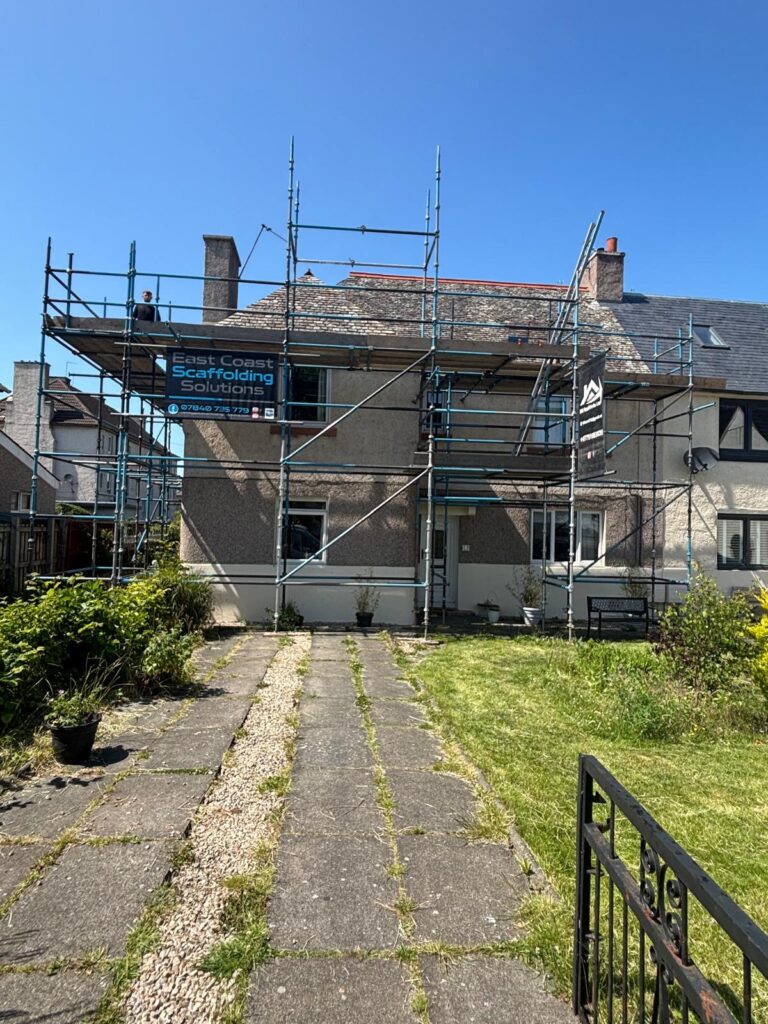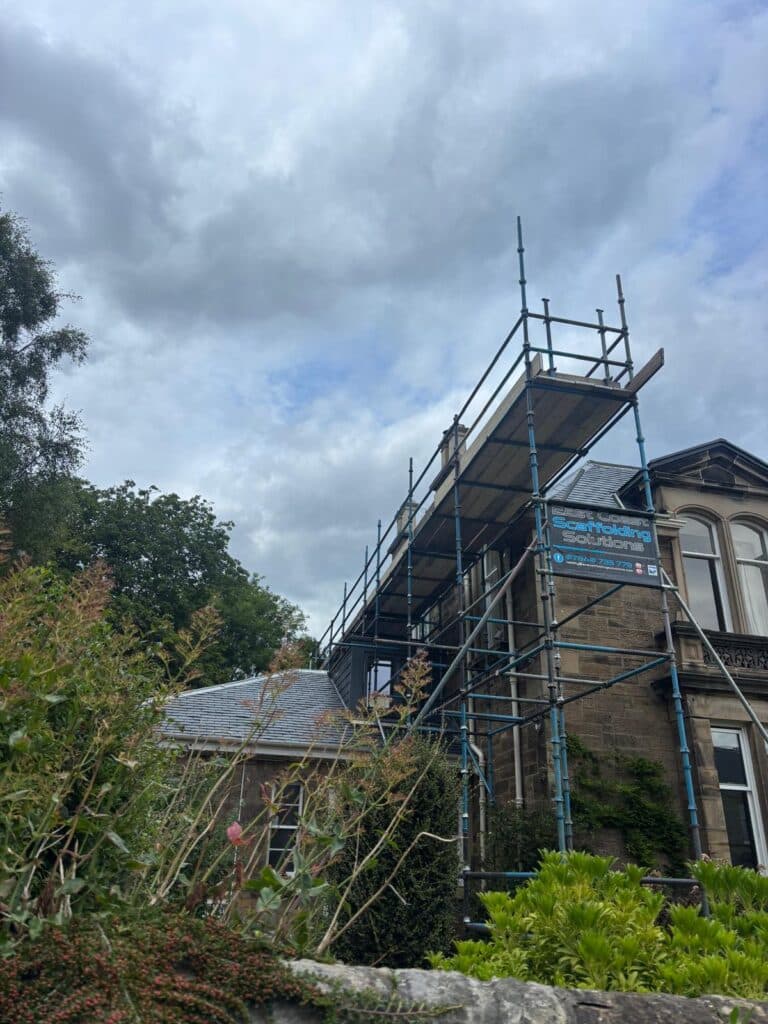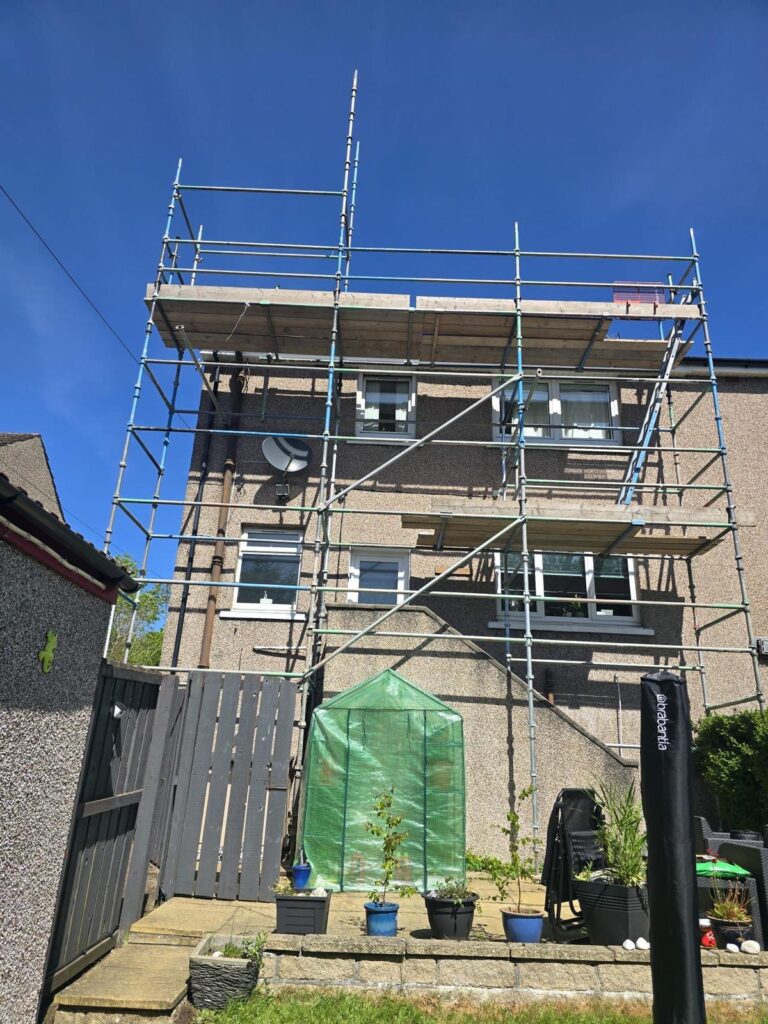
Very few construction sites offer perfectly level ground. From sloped driveways and stepped gardens to commercial developments built across changing elevations, uneven terrain is a common reality in the UK. Yet while it may seem like a minor inconvenience, installing scaffolding on uneven ground poses serious structural and safety risks if not handled correctly.
Scaffolding is designed to provide safe access at height. Its reliability depends entirely on the stability of its base. When that base is inconsistent, poorly compacted, or sloping, the risks increase significantly. Movement at ground level can transfer upward through the structure, affecting alignment, load distribution, and worker confidence.
Here we exaplain how professionals approach scaffolding on uneven ground, the risks involved, the installation methods used to control those risks, and the key safety considerations that ensure compliance with UK standards. Whether you are managing a project or simply want to understand what safe practice looks like, the principles below form the foundation of responsible scaffold design.
What Is Scaffolding on Uneven Ground?
Scaffolding on uneven ground refers to any scaffold structure erected on a surface that is not flat, level, or uniformly load-bearing. This includes:
- Sloped ground or gradients
- Stepped terrain with height changes
- Soft soil or recently excavated areas
- Mixed surfaces, such as paving and soil
- Ground affected by drainage channels or voids
In simple terms, it means the ground beneath the scaffold does not provide equal support at every base point.
Standard scaffold systems are designed to create level working platforms. When the ground is irregular, installers must compensate for those variations without compromising structural integrity. The objective is always the same: ensure the scaffold remains plumb, stable, and capable of supporting intended loads.
The complexity increases when ground conditions are not immediately obvious. For example, what appears firm may conceal poorly compacted fill beneath the surface. Professional scaffolders treat uneven ground as a structural variable that must be assessed and controlled, not improvised around.
Why It Matters in Construction
Ground conditions directly affect scaffold performance. The most common cause of scaffold instability is inadequate base support. When weight is not evenly distributed, pressure concentrates on specific points, increasing the risk of settlement.
This matters for several reasons.
First, worker safety depends on confidence in the structure. Even minor movement can affect balance at height.
Second, structural alignment influences how loads travel through the scaffold. If standards lean or base plates sink, stress shifts unpredictably through ledgers and transoms.
Third, uneven settlement can compromise the building’s ties. If the base moves, tie integrity may be affected.
Finally, from a legal perspective, UK regulations require that scaffolding be erected on suitable foundations capable of supporting imposed loads. Failing to assess ground conditions is not simply poor practice; it can constitute a breach of duty.
On residential projects, uneven ground is common around extensions and landscaping works. On commercial sites, level changes across a footprint may require stepped scaffold arrangements. In both cases, professional planning makes the difference between a secure structure and a hazard.
Key Risks Associated with Uneven Ground
Understanding the risks clarifies why installation must be methodical.
Uneven Load Distribution
When one base plate bears more weight than the others, it may sink over time. This can create tilt and progressive instability.
Settlement and Subsidence
Soft soil or recently disturbed ground may compress under load. Settlement might occur gradually, making it harder to detect early.
Lateral Movement
On sloped ground, gravity can introduce sideways pressure. Without proper bracing and ties, the scaffold may shift.
Hidden Voids or Services
Underground drainage runs or poorly backfilled trenches can collapse beneath concentrated loads.
Weather Effects
Heavy rain softens the soil. Frost causes expansion and contraction. Both alter the ground bearing capacity.
Professional installation accounts for these factors before erection begins, not after problems arise.
Design and Installation Principles
Safe scaffolding on uneven ground begins with structured preparation.
Comprehensive Site Survey
A competent survey identifies:
- Surface type and slope
- Signs of previous excavation
- Drainage patterns
- Ground firmness
- Access limitations
This evaluation determines whether additional measures are required before installing scaffold components.
Creating a Stable Base
The goal is to convert irregular ground into a dependable foundation.
Common methods include:
- Clearing loose debris
- Compacting soft soil
- Installing temporary support pads
- Levelling minor gradients
Where necessary, ground improvement may precede scaffold erection.
Use of Sole Boards and Base Plates
Sole boards spread the load over a wider area, reducing pressure on soft ground. Base plates sit on top of these boards to distribute weight evenly.
On uneven surfaces, sole boards are critical in preventing point loading.
Adjustable Base Jacks
Adjustable base jacks allow scaffolders to compensate for differences in ground height while maintaining vertical standards. However, they must remain within safe extension limits.
Overextension reduces structural stability.
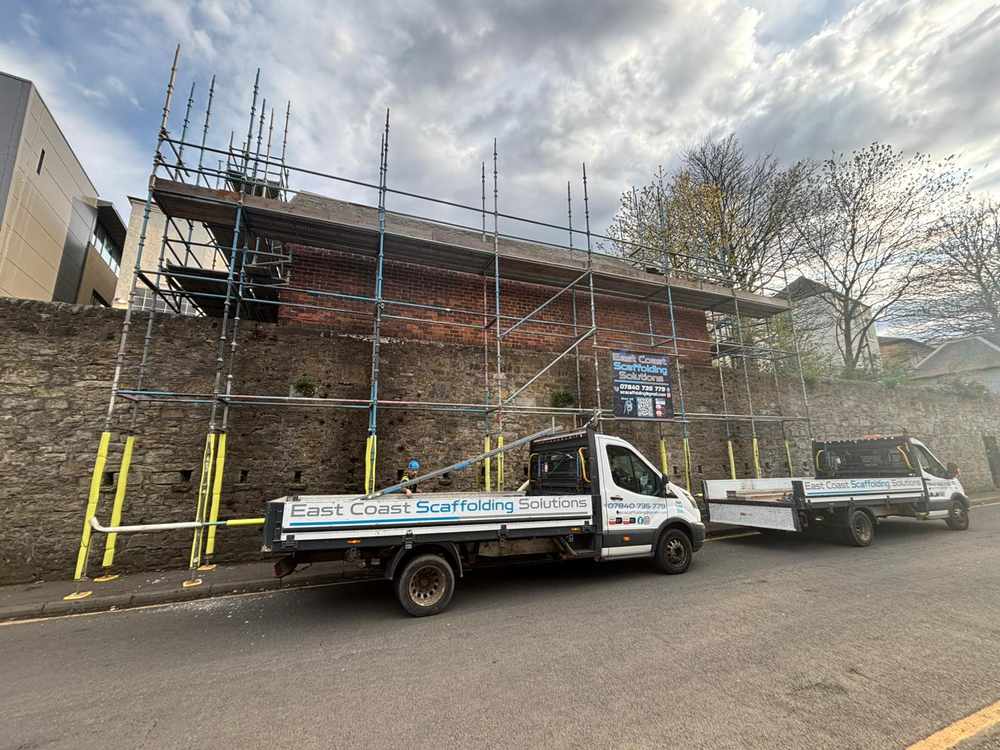
Stepped Scaffold Layouts
On pronounced gradients, the scaffold may be constructed in stepped sections that follow the terrain. Each lift remains level even as the ground beneath changes.
This approach maintains safe working platforms without forcing components into unsafe positions.
Enhanced Bracing
Diagonal bracing improves rigidity and helps resist lateral movement caused by slopes or wind exposure.
Secure Tying to the Structure
Building ties anchors the scaffold, preventing sway and increasing overall stability.
Together, these measures ensure that uneven terrain does not translate into uneven performance.
Safety Standards and UK Legal Expectations
UK scaffolding practices are governed by strict safety frameworks.
The Work at Height Regulations require employers to ensure that scaffolds are stable and erected on suitable foundations. This explicitly includes assessing ground bearing capacity.
In addition:
- Scaffolds must be inspected before first use
- Inspections must be repeated at defined intervals
- Additional checks are required after adverse weather or modification
- Erection must be supervised by a competent person
Professional contractors follow recognised industry guidance to confirm compliance. Documentation of inspections and assessment forms part of responsible site management.
Ignoring ground conditions undermines compliance. Regulators expect proactive risk control, particularly when working at height.
Practical Installation Tips for Uneven Ground
While each project differs, experienced scaffold teams follow proven practices.
Assess Before Delivering Materials
Avoid stacking scaffold materials on soft or sloped ground until suitability is confirmed. Premature loading can cause early settlement.
Use an adequate sole board size
Sole boards should extend beyond base plates sufficiently to distribute weight. Undersized boards defeat their purpose.
Avoid Improvised Packing
Packing beneath base plates must be secure and stable. Loose bricks or unstable materials introduce weakness.
Monitor After Heavy Rain
Rain can soften soil overnight. Reassess ground firmness before continuing work.
Check for Early Signs of Movement
Look for:
- Tilt in standards
- Cracking around base areas
- Gaps forming beneath boards
- Changes in tie tension
Prompt adjustment prevents escalation.
Plan for Drainage
Standing water weakens the ground over time. Ensure water flows away from base points.
These practical habits support long-term stability.
Common Challenges — And How Professionals Solve Them
Uneven ground presents predictable difficulties.
Challenge: Steep Slopes
Solution: Use a stepped scaffold design combined with extended sole boards and enhanced bracing.
Challenge: Soft or Recently Backfilled Soil
Solution: Improve ground compaction or introduce additional load-spreading supports before erection.
Challenge: Mixed Surfaces
Solution: Ensure consistent load distribution across different materials using appropriately sized boards.
Challenge: Limited Space for Ground Preparation
Solution: Adjust scaffold footprint and integrate tie strategy early to maintain rigidity.
Challenge: Weather Exposure
Solution: Increase inspection frequency and reinforce bracing where necessary.
Professional foresight reduces the likelihood of having to make reactive adjustments later.
When Specialised Planning Is Essential
Not all uneven ground is obvious at first glance. Certain scenarios demand additional attention.
- Extensions built over previously landscaped gardens
- Sites involving recent excavation or trenching
- Hillside properties
- Commercial builds across changing elevations
- Industrial areas with drainage slopes
In these cases, scaffold design should never be routine. Ground suitability must be confirmed before erection proceeds.
Domestic projects often underestimate this need, particularly when working in gardens or driveways. However, the structural principles remain the same regardless of project size.
Choosing the Right Scaffolding Contractor
Expertise makes a significant difference when installing scaffolding on uneven ground.
Look for contractors who:
- Conduct detailed site surveys
- Explain how they manage load distribution
- Provide inspection documentation
- Demonstrate design competence
- Carry appropriate insurance
Experience with complex terrain is particularly valuable. Skilled scaffolders recognise potential instability before it becomes visible.
Clear communication is equally important. A professional contractor will explain why certain preparatory steps are necessary rather than taking shortcuts.
Our Final Say!
Uneven ground is not unusual in construction, but it is never insignificant. The integrity of a scaffold depends entirely on the stability of its foundation. When the terrain is irregular, that stability must be engineered deliberately.
Through proper assessment, careful ground preparation, intelligent use of sole boards and adjustable components, and strict adherence to safety standards, scaffold professionals can transform challenging surfaces into reliable support systems.
The principles remain consistent: distribute load evenly, maintain vertical alignment, reinforce against movement, and inspect regularly.
Scaffolding on uneven ground demands respect, planning, and competence. When these elements are present, projects progress safely and efficiently. When they are ignored, risks multiply quickly.
Safe installation is not about improvisation. It is about understanding the ground beneath your feet and building from it correctly.